
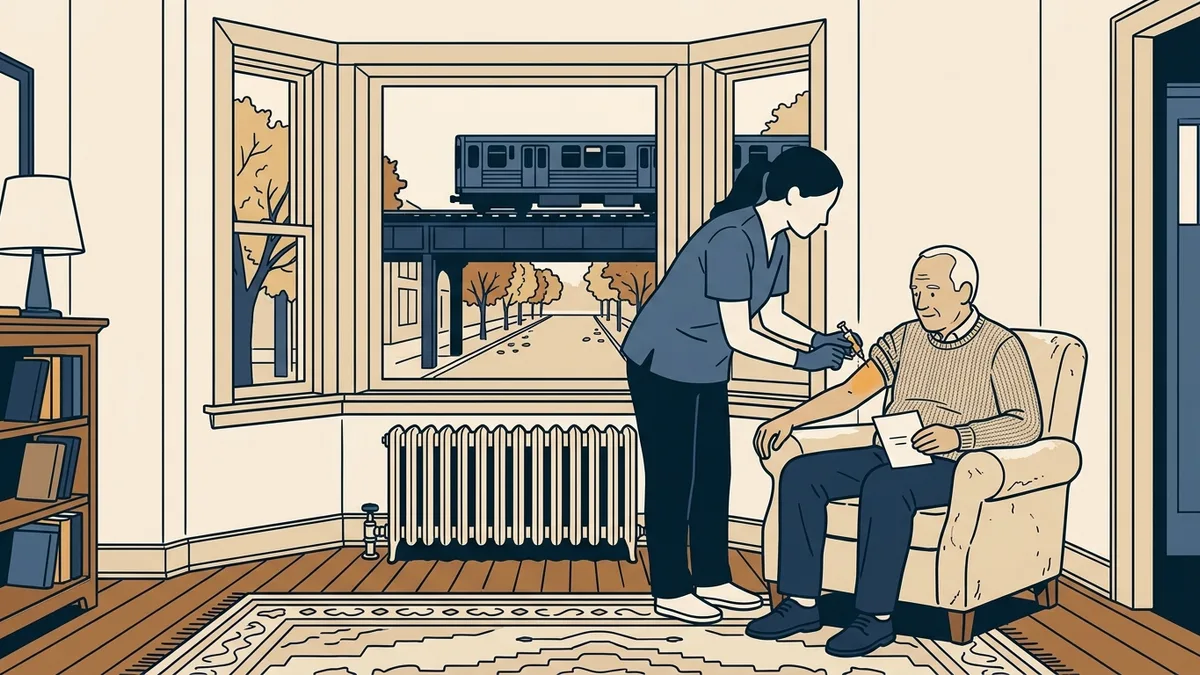
Illinois's IDPH licenses home health, home services (non-medical) and home nursing agencies under 210 ILCS 55, and hospices under 210 ILCS 60. New home health agencies start with a 240-day provisional license; the full license lasts two years and costs $1,500. Hospice licenses renew annually.
Illinois splits in-home care into categories and licenses each one through the Illinois Department of Public Health (IDPH). The Home Health, Home Services, and Home Nursing Agency Licensing Act (210 ILCS 55) covers three types of agency, and the Hospice Program Licensing Act (210 ILCS 60) covers hospices. An owner who plans to offer more than one kind of care often needs more than one license.
Which license does each kind of agency need?
The Act's purpose clause says care at home is delivered by "3 basic types of agencies: home health care, home nursing care, and home support services," each needing different oversight (210 ILCS 55/1.01).
- Home health agency: provides skilled nursing and at least one other home health service, such as physical, occupational or speech therapy, medical social services or home health aide services, under a plan of treatment (55/2.04, 2.05). No one may open, manage, conduct or maintain one, "or advertise as such," without a license (55/3).
- Home services agency: provides home services directly, or acts as a placement agency, for help with activities of daily living, housekeeping, personal laundry and companionship that do not require a nursing license (55/2.08, 2.09). Licensing has been required since September 1, 2008 (55/3.3). Agencies limited to housecleaning are excluded.
- Home nursing agency: provides skilled nursing and home health aide services directly or as a placement agency, as defined in section 2.11, which includes in-home shift nursing under Medicaid's EPSDT requirement and a home and community-based services waiver for medically fragile, technology-dependent people (55/2.11, 3.7).
IDPH must offer a system for obtaining licenses "singly or in any combination," with a separate fee for each (55/4(d)).
How does the provisional license work?
If an applicant has never been licensed, or the agency is not operating yet when it applies, IDPH may issue a provisional license valid for 240 days. Within 30 days before it expires, IDPH inspects the agency and, if it substantially meets the requirements, issues a full license (55/4(a)). The provisional period is the window to start serving clients and show the agency works as described.
IDPH can also put an existing licensee that falls out of compliance on a provisional license for up to 120 days, extendable once by another 120 days (55/4(b)).
What does a home health license cost?
"A 2-year license shall be issued to any person conducting or maintaining a home health agency" that applies, pays and meets the requirements, and "the fee for each single home health agency license or any renewal shall be $1,500" (55/4(c)). Home services and home nursing agency fees are set by IDPH rule at levels that make those programs self-supporting (55/6.3(b), 6.7(b)). Certified local health departments pay no fee.
Which items does the application ask for?
Section 5(a) lists the core contents for a provisional license application for any of the agency types:
- name, address and location;
- organization and governing structure;
- number and qualifications of staff;
- sources of financing of services and of the agency;
- service area;
- patient load;
- agency utilization;
- service charges;
- affiliation agreements with other providers; and
- anything else IDPH requires.
Home services and home nursing agencies must also comply with the Health Care Worker Background Check Act, tell workers and consumers in writing who is responsible for employment taxes, workers' compensation, liability, supervision and hiring and firing, and follow IDPH's abuse reporting rules (55/6.3, 6.7). Home health agencies must offer or arrange annual influenza vaccination for clients and pneumococcal vaccination for clients 65 and older, and document the outcome (55/6.5).
Why does licensure affect referrals?
Because Illinois law makes it a condition. A licensed hospital, a nursing home, or a licensed health care provider that receives state funds "may not refer a patient or the family of a patient to an agency unless the agency is licensed under this Act" (55/3.8). An unlicensed home services agency is cut off from those referrals by statute.
How are Illinois hospices licensed?
Under the Hospice Program Licensing Act. No one may establish, conduct or maintain a comprehensive or volunteer hospice program without an IDPH license, and no agency may advertise or present itself as one without meeting that requirement (210 ILCS 60/4(a), (b)). Key points:
- The license is renewed annually and cannot be transferred or assigned (60/4(c), (d)).
- The application includes a hospice service plan, a financial statement and a license fee set by IDPH by program category (60/5).
- A comprehensive hospice program must meet the Medicare conditions of participation in 42 CFR Part 418 (60/8.5).
- A volunteer hospice program must include the word "Volunteer" in its corporate name and in its communications (60/8.10).
Where does Medicare enrollment stand?
An Illinois license does not enroll an agency in Medicare. Since May 13, 2026, CMS has not enrolled new home health agencies, hospices, branches or hospice locations nationwide unless the application was received before that date. The moratoria were imposed for six months, and CMS may extend them in six-month increments (CMS-6101-N, CMS-6102-N). Home services agencies are unaffected. See our moratorium hub.
Can we prepare an Illinois application?
A home services agency license is our Non-Medical Home Care License, $899. A home health, home nursing or hospice license is our Home Health or Hospice State License, $1,995 per agency. We work out which combination of licenses fits your service list, prepare each application and its attachments, and plan the provisional period so the agency is ready for IDPH's inspection. Your owner signs and pays IDPH. See pricing and the Illinois state page.
Common questions
- Do I need a license for non-medical home care in Illinois?
- Yes. Since September 1, 2008, a home services agency providing help with daily living, housekeeping, laundry or companionship needs an IDPH license under 210 ILCS 55/3.3. Housecleaning-only businesses are excluded.
- How long is the Illinois provisional home health license?
- 240 days. IDPH inspects within 30 days before it ends and issues a full license if the agency substantially meets the requirements.
- How much is an Illinois home health agency license?
- $1,500 for each two-year license or renewal under 210 ILCS 55/4(c). Home services and home nursing fees are set by IDPH rule.
- Can Illinois hospitals refer patients to unlicensed home care agencies?
- No. A licensed hospital, nursing home or state-funded licensed provider may not refer a patient or family to an agency unless it is licensed under the Act.
Need Help with Enrollment or Licensing?
We prepare your Medicare enrollment, accreditation survey and state licenses in the order CMS requires, for your official to sign, and track every one to a decision.